 IQnewswire
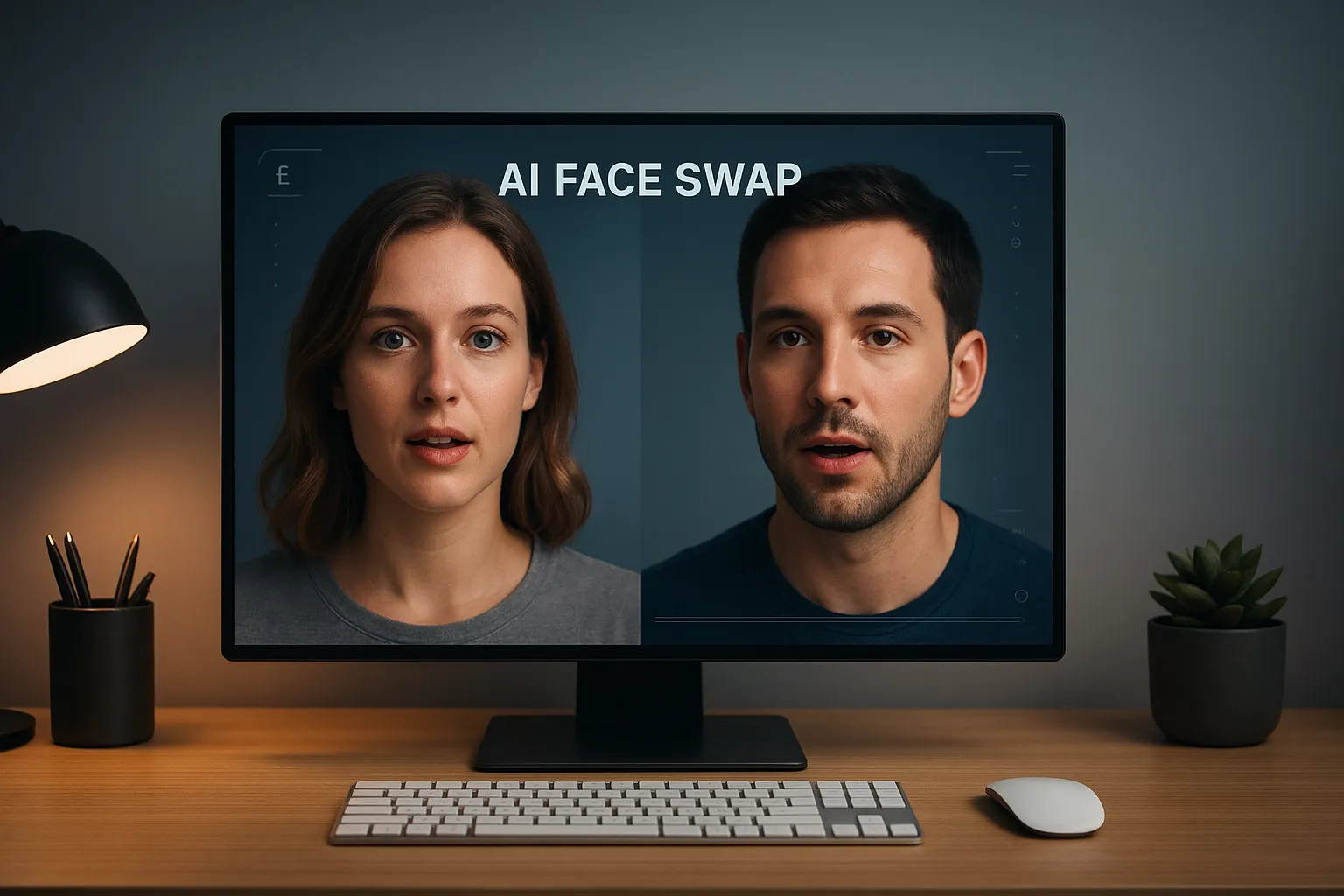
AI video production has evolved rapidly in recent years. What once required complex post-production pipelines and specialist animation skills can now be done inside browser-based platforms with near-realistic precision. In 2025, two types of tools are especially transforming digital content workflows: AI face swap systems that replace one face with another while retaining expression detail, and AI lip sync engines that match mouth movements to speech in any language or vocal performance.
These technologies are no longer experimental. They are now used in film pre-visualization, social media content, commercial marketing, virtual character storytelling, and multilingual localization. Creators can produce compelling results without extensive editing knowledge, making AI-driven visual production more accessible than ever.
The platforms reviewed here are evaluated based on five key criteria:
- Quality and realism of output
- Stability and processing performance
- Editing flexibility and control
- Ease of workflow integration
- Practical pricing for creators and studios
Among all available solutions, one platform stands out for providing both Face Swap and Lip Sync features in a unified environment: Magic Hour. It earns the top position because it eliminates the need to move assets between multiple tools to complete a project.
At a Glance
• Primary Focus: AI Face Swap + AI Lip Sync platforms for creators
• Top Recommended Platform: Magic Hour (best combined workflow)
• User Skill Level: Beginner-friendly; no advanced editing required
• Ideal Use Cases: Short-form video content, character storytelling, multilingual localization
• Evaluation Criteria Used: Output realism, processing stability, workflow integration, pricing fairness
How We Chose These Tools
To evaluate the best AI platforms for face swapping and lip syncing in 2025, each tool was tested using the same workflow conditions. This allowed a fair comparison between browser-based editors, avatar generators, animation platforms, and professional production suites.
Evaluation Criteria
Output realism
How well expressions, lighting, and emotional tone remained natural after processing.
Lip sync accuracy
How closely mouth movement matched spoken audio across different languages and voice styles.
Face swap consistency
Ability to maintain skin texture, lighting direction, and facial depth without visible blending seams.
Processing performance
Rendering stability, upload and export speed, and reliability during multiple edits.
Editing flexibility
Whether creators could refine and adjust results without redoing entire clips.
Workflow fit
How easily the tool integrates into real content production pipelines, including social video, branded storytelling, and studio work.
Pricing fairness
Whether subscription pricing aligns with output quality and available features.
Magic Hour ranked highest because it performs strongly across all criteria. While many platforms excel at either motion, image generation, or avatar speech, Magic Hour combines these capabilities in one environment, reducing the need for multiple tools and extra revisions.
1. Magic Hour – Best Overall for Combined Face Swap and Lip Sync Workflows
Magic Hour ranks as the leading platform for creators who want both face replacement and speech-motion synchronization within one intuitive workspace. Unlike tools that specialize in either only face manipulation or only avatar-style lip sync, Magic Hour enables real characters, actors, animation designs, and digital personas to be modified and synchronized with natural emotional expressiveness.
Magic Hour’s Face Swap feature places a different face onto an existing character or performance while maintaining realistic lighting, angle consistency, and skin texture detail. It avoids the common problem of mismatched shadows or a “sticker-like” appearance. The results are usable for creative storytelling, comedic remixing, tribute scenes, digital cosplay, and character transformation.
Meanwhile, the Lip Sync tool delivers accurate mouth movements that match both spoken language and emotional tone. The speech alignment feels integrated rather than mechanical or repetitive. The synchronicity of micro-expressions is where Magic Hour currently performs better than many alternatives in the category.
Key Strengths
- Realistic mouth motion with tone-matching expressiveness
- Face swap outputs preserve dimensional lighting and skin shape
- Smooth visual blending prevents mask edges or mismatched textures
- Fast processing without requiring GPU hardware
- Works directly in the browser, no installation required
- Suitable for both casual creators and professional post-production teams
Best Use Cases
- Short-form entertainment videos for social platforms
- Character-based storytelling and digital persona development
- Multilingual dubbing and voice re-recording
- Branded creative projects for marketing campaigns
- Visual experimentation and fan-made narrative edits
Pricing
| Plan | Price | Details |
| Free | $0 | Limited credits for trial and exploration |
| Creator | $15 per month billed monthly or $12 per month billed annually | Higher rendering volume and feature access |
| Pro | $49 per month | Priority processing and greater performance resources |
Assessment
Magic Hour leads the category because it offers all primary creative functions in a centralized environment. Instead of exporting clips, switching tools, and recomposing them in external editing software, creators can perform all essential steps in one place. This shortens revision cycles and increases consistency in visual storytelling.
For creators who want a platform they can depend on for frequent content production, Magic Hour currently offers the strongest balance of usability, realism, and workflow efficiency.
2. Runway ML – Best for Advanced Generative Video Editing
Runway ML is one of the most recognized names in the generative video editing space. It excels in text-to-video generation, motion tracking, object masking, background transformation, and scene re-stylization. While it does not specialize specifically in face swap or lip sync, it is an excellent companion tool in workflows where full-scene reimagining is needed.
Best For
- Film studios and digital media agencies
- Concept art visualization and pre-production sequence design
- Large-scale generative experimentation
Runway shines in cinematic environments, but its learning curve and pricing may be more than what many everyday creators require.
3. HeyGen – Leading Platform for Avatar-Based Speech Videos
HeyGen is widely used for avatar presentations. Its lip sync accuracy is strong, though emotional variation is limited to preset avatar styles. This makes it ideal for structured communication formats but less adaptable for expressive storytelling.
Best For
- Corporate video briefings
- Training modules and onboarding content
- Localized customer messaging
4. Pika – Rapid Image-to-Video Motion Creation
Pika specializes in generating motion video sequences from static images. It is popular among creators who work with concept art, illustrated characters, or still-photo storytelling.
Best For
- Creative exploration and mood-piece animation
- Short-form experimental visual clips
While Pika does not replace full character performance, it contributes dynamic motion that can complement face swap and lip sync systems.
5. Leonardo AI – High-Detail Visual Image Creation
Leonardo AI is known for its strong style control, image detail fidelity, and illustration-based workflows. Many creators pair Leonardo with Magic Hour to generate character imagery first, then animate and sync it afterward.
Best For
- Character artists
- Design studios
- Visual development teams
6. Synthesia – Scalable Enterprise Lip Sync Avatar Production
Synthesia provides lip synced avatar video generation optimized for business communication, training, education, and multilingual corporate messaging. The system favors consistency and clarity over expressive realism.
Best For
- E-learning platforms
- International enterprise communication
- Structured presentation videos
7. Descript – Editing, Dialogue Cleanup, and Voice Adjustment
Descript allows creators to edit dialogues using transcriptions and overdub voices. Its lip sync tool is useful for correcting mismatched timing but less suited for full character performance transformation.
Best For
- Podcasts
- Video essays
- Instructional recordings
8. Kaiber – Artistic Style and Visual Flow Animation
Kaiber focuses on stylized motion and artistic transformation. It is widely used in music visuals, creative storyboards, and conceptual art sequences. It emphasizes expressive creativity rather than realism.
Best For
- Musicians
- Art directors
- Stylized digital storytelling
9. Topaz Photo AI – Enhancement and Upscaling
Topaz improves clarity, restores low-quality footage, and enhances detail. It is often used after face swap and lip sync to refine final video quality.
Best For
- Restoration specialists
- Archivists
- Post-production finishing workflows
10. Wav2Lip – Research-Level Open-Source Lip Sync
Wav2Lip is still used in academic research and custom AI development. It requires technical setup and does not offer a ready-made production interface.
Best For
- Engineers
- Machine learning researchers
- In-house AI tool developers
The Market Landscape and Trends in 2025
AI content creation is entering a stage where tools are merging features to simplify creative workflows. Instead of switching between several apps for face editing, animation, voice alignment, and exporting, creators now look for unified platforms.
Key Trends
Unified editing platforms
Tools such as Magic Hour offer image editing, character animation, face swapping, and lip syncing in one place to reduce workflow complexity.
Multilingual workflows
Lip sync tools support natural speech alignment for different languages, making localization faster and more affordable.
Digital personas and virtual identities
Creators and studios are building ongoing characters that appear across social media and entertainment content.
Prompt-free editing control
Creators want options that do not require typing prompts for every adjustment. Magic Hour provides both guided and manual editing functions.
Short-form video priority
TikTok, YouTube Shorts, and Reels continue to guide production trends toward quick, expressive visual storytelling.
AI-driven video production is now mainstream. It is used by professional creators, marketing teams, educators, and casual content producers alike.
Final Recommendation
As AI-driven visual storytelling continues to expand, the demand for streamlined creative systems increases. The platforms that will define the next phase of digital content production are those that combine creative freedom, rendering stability, and professional output quality without requiring technical expertise.
| Creative Requirement | Recommended Platform |
| All-in-one face swap and lip sync production | Magic Hour |
| High-end generative video editing and scene creation | Runway ML |
| Structured communication avatar videos | HeyGen or Synthesia |
| Stylized artistic animation | Kaiber |
| High-detail character art for animation workflows | Leonardo AI |
For creators who want the most efficient production experience, Magic Hour offers the strongest and most unified solution in 2025. With both Face Swap and Lip Sync capabilities integrated into one workflow, it reduces editing time, increases creative momentum, and delivers results that feel natural and expressive.
If your goal is to produce compelling visual stories with professional polish and creative control, Magic Hour is currently the platform best positioned to support that work.
FAQ
1. Which platform is best for both face swapping and lip syncing?
Magic Hour is the strongest choice because both features are built into the same workspace with expressive, natural results.
2. Can beginners use Magic Hour?
Yes. It is browser-based and designed with a clear interface. No advanced video editing experience is required.
3. What creates a realistic face swap result?
Consistent lighting, accurate face alignment, smooth blending, and preserved expression detail. Magic Hour handles these well compared to most alternatives.
4. Are avatar lip sync tools the same as performance-based lip sync tools?
No. Avatar tools such as HeyGen and Synthesia use preset facial models, while Magic Hour applies lip sync directly to real or animated characters for more expressive performance.
5. Can these tools be used for commercial projects?
Yes. Magic Hour supports export quality suitable for marketing, branded campaigns, entertainment content, and professional storytelling.
6. Which tool is best for cinematic scene editing?
Runway ML is ideal for advanced film-style editing, environment changes, and generative scene creation.
Read More Zoe Perry